Roof Claim Denied for "Wear and Tear": What to Do Next
Wear-and-tear is the most common roof claim denial — and one of the most contestable, because the line between storm damage and aging is a judgment call. Here's the evidence that moves it.
"Wear and tear, deterioration, or pre-existing condition" is the single most common reason roof claims get denied — partly because it's sometimes true, and partly because it's the easiest box for a skeptical adjuster to check. Your policy covers sudden, accidental losses, not gradual aging, so the entire dispute comes down to one question: what actually caused this specific damage?
That's a causation argument, and causation arguments are won with evidence.
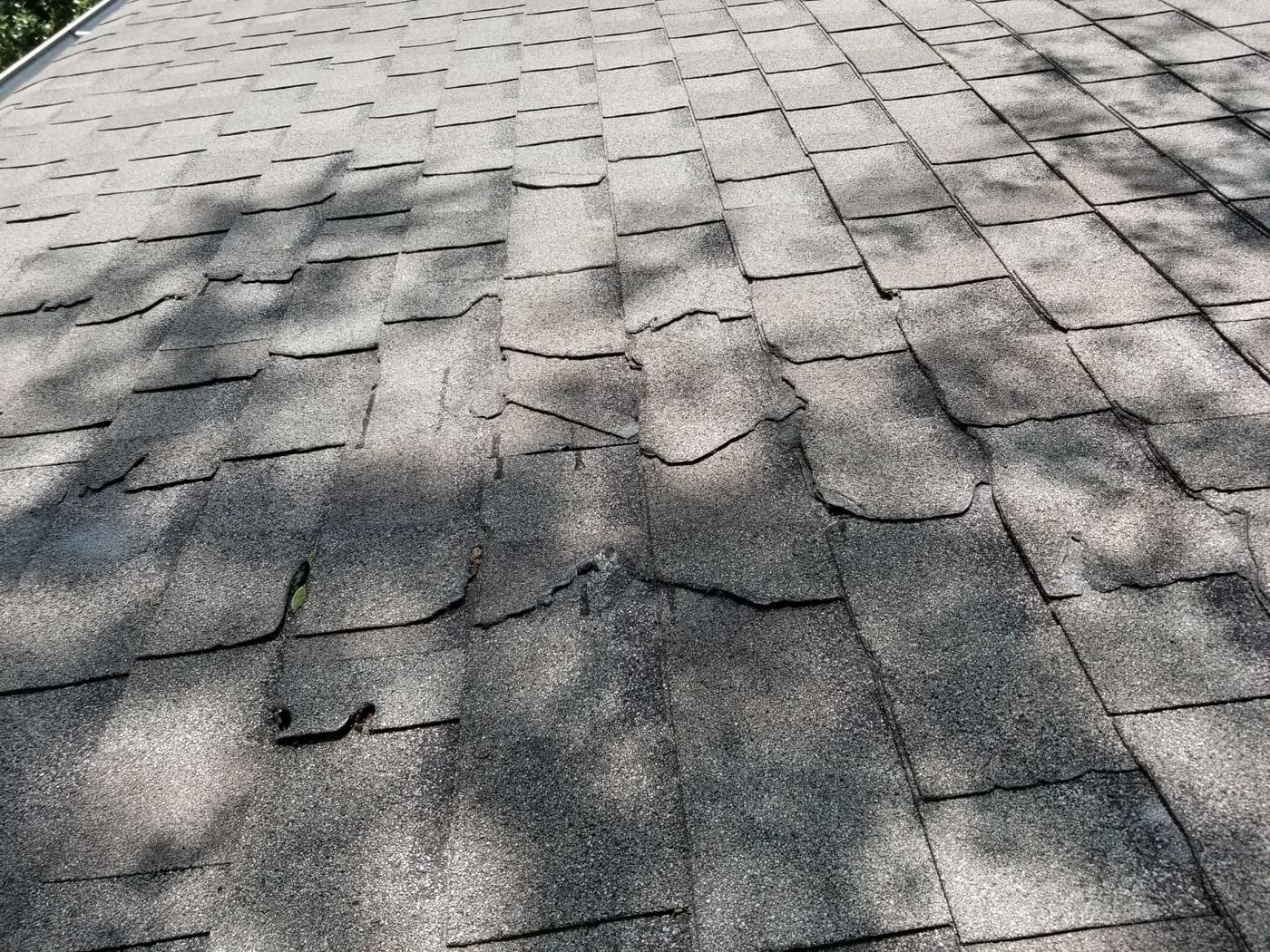
Uniform granule loss and crumbling edges across a slope — this is what adjusters classify as wear, not storm damage. Impact evidence has to look different from this. Photo: Samuel Bolton, CC BY-SA 4.0
First, read the denial letter closely
"Wear and tear" denials come in flavors, and your counter depends on which one you got:
- "No storm-related damage observed" — a causation finding you attack with impact evidence and storm data.
- "Damage consistent with age and deterioration" — same, but expect the carrier to lean on your roof's age and maintenance history.
- "Long-term damage / late reporting" — they're arguing the loss predates your policy period or was reported too late; here filing-deadline facts and dated evidence matter most.
The evidence that turns these denials around
Prove the storm happened at your address. NOAA storm event records, local news coverage, and hail-swath maps for your date and location. No qualifying storm, no storm claim — this is the foundation.
Prove impact, not just deterioration. Hail leaves event evidence: bruises where granules are crushed into the mat (they feel soft, like a bruised apple), hits concentrated on storm-facing slopes, and — most persuasively — matching dents in gutters, downspouts, vents, and window wraps. Aging doesn't dent aluminum. Our damage identification guide shows exactly what to photograph.
Prior-condition photos. Real-estate listing photos, drone shots, a past inspection report — anything dated before the storm showing the roof intact is devastating to a "pre-existing" theory.
A professional causation opinion. A written, photo-documented statement from an established roofer, or for large claims a forensic engineer's report. If your roofer and the adjuster disagree, get the disagreement onto the roof at a joint reinspection.
The escalation path
- Request a reinspection with your contractor present — the cheapest, fastest way to reopen the question.
- Submit a written rebuttal pairing your storm data with your impact photos, keyed to the denial letter's specific language.
- Escalate: public adjuster or engineer for big claims, the appraisal clause for valuation disputes, a Department of Insurance complaint, or an attorney if you suspect bad faith. The full sequence, including how to write the rebuttal, is in our appeal guide.
Be honest with yourself first
Sometimes the denial is right. If your 22-year-old roof shows uniform curling on every slope, no impact marks, and no dented metal anywhere, spending a year fighting is worse than spending that energy on replacement planning. But if there was a real storm and there are real impact marks, wear-and-tear denials are among the most frequently reversed — the carriers' own reinspection statistics prove homeowners who push back with evidence often win.
Go deeper
Claim Denied? How to Read the Letter and AppealCommon reasons roof claims get denied, how to request a reinspection, how to write a rebuttal, the appraisal clause, and when to file a state complaint or call an attorney.
Not sure where your claim stands?
Get matched with a vetted local roofer who documents damage the way adjusters expect to see it.
Frequently asked questions
Yes. Age isn't grounds for denial by itself — an 18-year-old roof hit by 1.5-inch hail suffered a sudden, accidental loss just like a new one did. Age affects the payout (heavy depreciation on an ACV basis) and makes the carrier more skeptical, but "old roof" and "storm-damaged roof" are not mutually exclusive, and the denial must rest on the damage being gradual, not on the roof's birthday.
Last updated July 24, 2026